
COMPOLYTICS® Tailored Spectroscopy Solutions
Application-specific spectroscopy products and services for business customers.
ScanCorder Handheld Device with Contact Probe


Specifications
- Specifically developed for measuring solid objects and bulk materials
- Number of LED channels: typically 12 (sequential, configurable), more on request
- Number of receiver channels: typically 10 (fixed, several sets available), more on request
- Total number of spectral bands: typically up to 120 in principle (LED channels × receiver channels; actual number depends on spectral overlap)
- Spectral range: approx. 350–1,000 nm
- Measurement principle: reflectance
- Measurement time: approx. approx. 2–5 s
- Tailored calibration model based on machine learning
ScanCorder with Tailored Sensor Heads

Specifications
- Geometry, handling, and spectral layout optimised for specific measurement tasks
- Measurement principle: reflectance or transmission
- Tailored calibration model based on machine learning
Angular Spectroscopy


Specifications
- Extending Compolytics’ unique inverted spectroscopy approach to provide additional information on material microstructure
- Samples illuminated with an application-specific set of wavelengths at multiple angles
- Simultaneous assessment of chemical composition and sample microstructure
- Measurement principle: reflectance or transmission
- Tailored calibration model based on machine learning
ScanCorder with Predefined Spectral Characteristics


Specifications
- Common predefined wavelength combinations available
- Equally distributed spectral bands within specific regions of the electromagnetic spectrum, e.g., VIS, VNIR, NIR
- Implementation of common spectral indices, e.g., various vegetation indices
- Application-specific or customer-defined selection of relevant spectral bands, combined with a customised sensor-head design
- Tailored calibration model based on machine learning to translate spectral raw data into application-specific measures
ScanCorder for Liquids
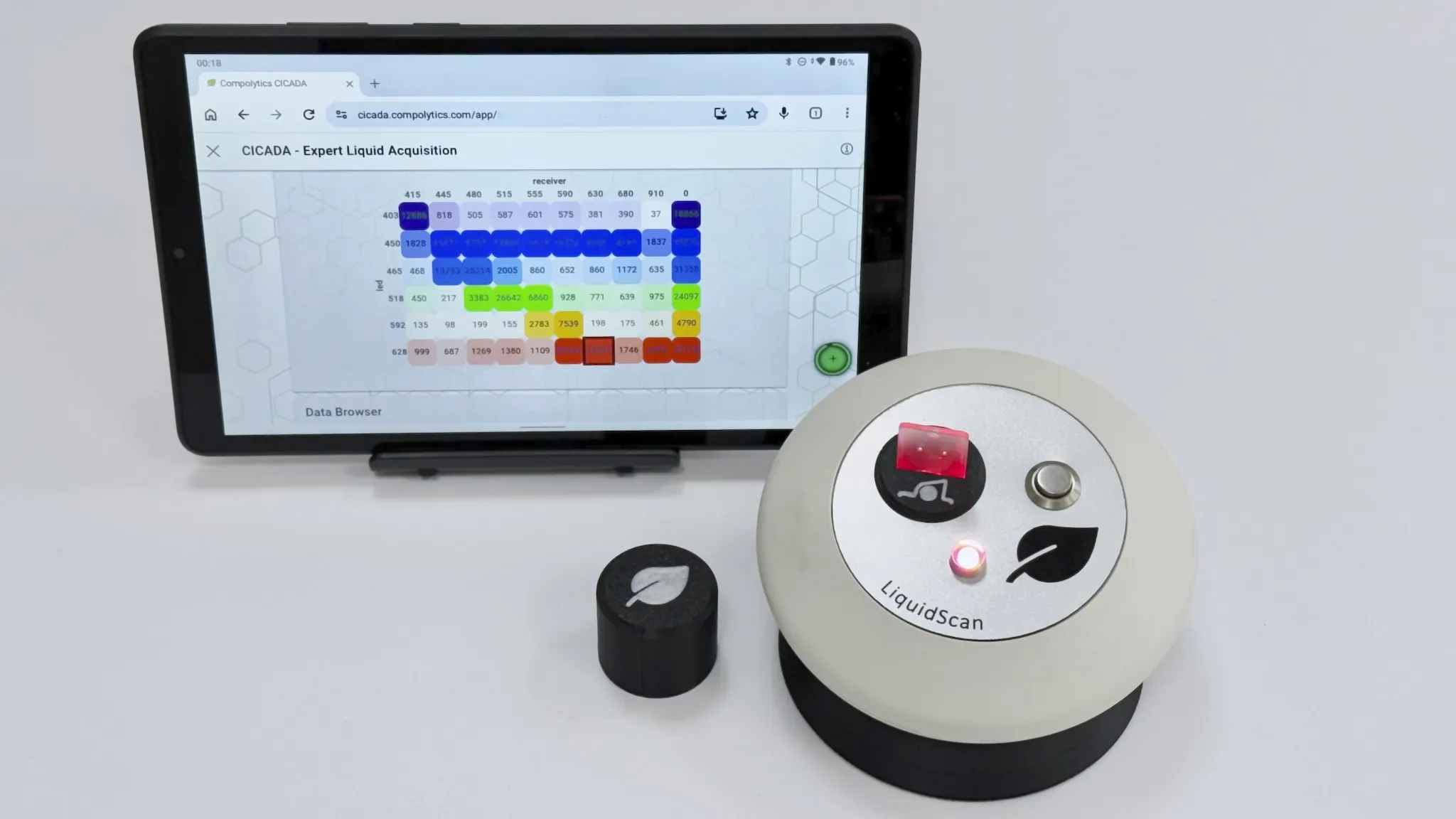
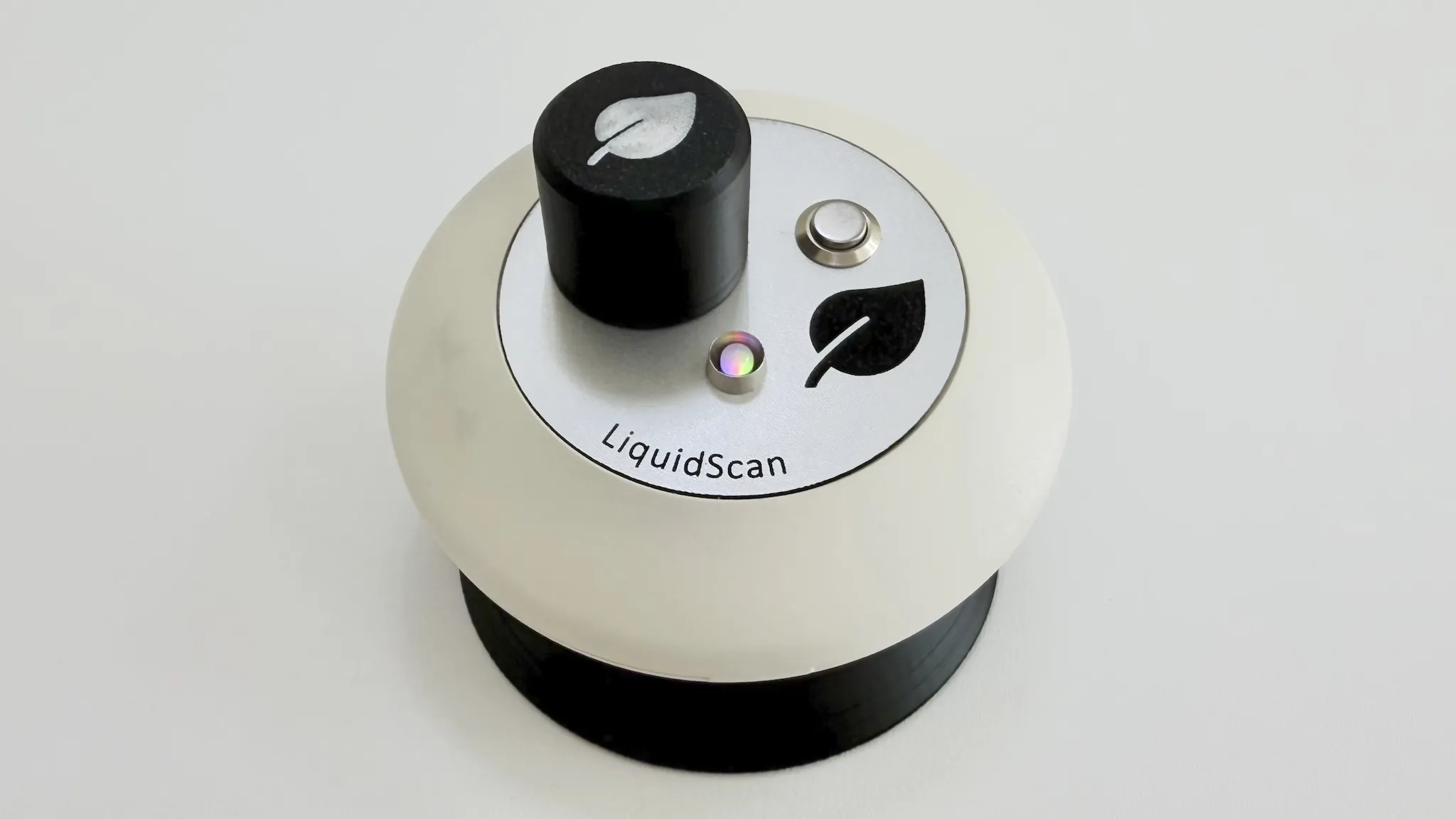


Specifications
- Specifically developed for measurement of small volumes of liquids
- Number of LED channels: 1 to 10
- 1 channel: wide-band, fixed, several sets available
- Up to 10 channels: narrow-band, sequential, configurable
- Number of receiver channels: 10 (fixed, several sets available)
- Total number of spectral bands: up to 100 in principle (LED channels × receiver channels; actual number depends on spectral overlap)
- Configurable measurement bays to accommodate application-specific spectral designs (e.g., number and position of bands) and liquid containers (e.g., geometry, material, coating)
- Spectral range: approx. 350–1,000 nm
- Measurement principle: transmission
- Measurement time: approx. 1–5 s
- Tailored calibration model based on machine learning